Homebuilt aircraft can be fantastic airplanes.
Some are beautifully built, thoughtfully maintained, and fly better than many factory-certified aircraft. They can offer great performance, modern avionics, excellent efficiency, and a level of customization that is hard to find anywhere else.
But there is one thing every buyer needs to understand before buying an experimental amateur-built aircraft:
You are not just buying the airplane.
You are buying the builder’s workmanship, the builder’s records, the builder’s decisions, the builder’s drawings, the builder’s notes, the builder’s parts choices, and sometimes the builder’s memory.
That last part can become a problem.
We recently worked with an owner who found himself in a tough spot after buying a homebuilt aircraft he did not build. The airplane needed maintenance help, supporting documentation, and repairs to address discrepancies. The owner was not trying to do anything unusual. He just wanted to get the aircraft properly evaluated, documented, repaired, and back in the air.
But the process was harder than it should have been.
The owner had trouble getting the supporting maintenance information he needed. He had difficulty finding help. The documentation path was not clear. The airplane was nearly sold because the owner could not get the issue resolved in a way that made him comfortable continuing to own and fly it.
That is a frustrating place to be.
Fortunately, we were eventually able to help get what was needed, work through the discrepancies, and get the airplane back in action.
But the lesson is worth talking about.
Experimental Does Not Mean “No Rules”
There is a common misunderstanding around homebuilt aircraft.
Some owners hear “experimental” and think that means maintenance and documentation are casual. That is not true.
Experimental aircraft are different from standard category certified aircraft, but they are still aircraft. They still need to be maintained correctly. They still need records. They still need condition inspections. They still need safe repairs. They still need someone who understands what they are looking at.
The challenge is that a homebuilt aircraft may not have the same kind of factory maintenance manual, illustrated parts catalog, service manual, or type certificate data that a Cessna, Piper, Beechcraft, or Mooney owner is used to.
That changes the game.
With a certified aircraft, a mechanic can often go to the manufacturer’s manual, the parts catalog, the service information, AD research, STCs, and approved data. With a homebuilt, the maintenance trail may depend heavily on the original builder’s documentation.
If that documentation is weak, missing, scattered, or unclear, the new owner can end up in a very difficult position.
The Airplane May Be Good, but the Paper Trail May Be Bad
A homebuilt aircraft can be mechanically sound and still be hard to support.
That is the part buyers sometimes miss.
The airplane may look great. It may fly well. The panel may be modern. The paint may be nice. The engine may run well. The seller may be honest. The builder may have done good work.
But if the records are poor, the next owner may struggle when something needs to be inspected, repaired, replaced, or justified.
That is especially true when the aircraft has unusual systems, custom fabrication, non-standard parts, builder-designed brackets, modified controls, unique fuel systems, custom electrical work, or undocumented changes from the original kit design.
When everything works, nobody thinks about the documentation.
When something stops working, the documentation becomes the airplane.
What the New Owner Needed
In this case, the owner needed help with an on-condition item and some discrepancies that had to be addressed. The aircraft was not simply coming in for a quick look and a logbook entry. It needed a real evaluation.
The problem was not that anyone wanted to make the process difficult. The problem was that the information needed to support the maintenance decision was not easy to obtain.
That puts the owner in a pickle.
A shop cannot responsibly sign off something it cannot understand, verify, or document. A good mechanic is not going to guess on a structural issue, a control system issue, an engine installation issue, or a custom system just because the owner needs the airplane back.
That is not being difficult.
That is doing the job correctly.
When the aircraft is experimental and the documentation is thin, the shop has to slow down. We have to figure out what was built, how it was built, what data or instructions apply, what the operating limitations require, what condition the component is actually in, and what path makes sense.
That takes time.
It also takes a shop willing to work through the problem instead of just saying, “We do not want to touch it.”
Why Some Shops Avoid Homebuilt Aircraft
There are good reasons some shops are cautious around experimental aircraft.
Every homebuilt is a little different. Two aircraft built from the same kit can have different wiring, different panels, different fuel plumbing, different engine installations, different interior choices, different brackets, different access issues, and different workmanship.
One may be gorgeous.
The next may be terrifying.
For a shop, the risk is not just the repair itself. The risk is inheriting someone else’s undocumented work and then being asked to make a maintenance decision without enough information.
That is why homebuilt ownership rewards preparation.
The better the records, the easier it is for a qualified mechanic or repair station to help you.
The worse the records, the more expensive and frustrating the maintenance path can become.
What You Should Get When Buying a Homebuilt Aircraft
If you are buying a homebuilt aircraft you did not build, do not treat the paperwork as an afterthought.
Before money changes hands, ask for everything.
Not just the airworthiness certificate and logbooks. Everything.
You want the builder’s manual. The kit manufacturer’s manuals. Assembly manuals. Drawings. Wiring diagrams. Weight and balance records. Equipment lists. Operating limitations. Condition inspection records. Engine and propeller records. Avionics documents. Fuel system diagrams if available. Electrical schematics. Any service bulletins or kit manufacturer letters. Any builder notes. Any photographs from construction. Any documentation of deviations from the original kit design.
If the aircraft has custom work, you want to know what was changed and why.
If the fuel system was modified, document it.
If the panel was rewired, document it.
If the engine installation is not exactly per the kit manufacturer’s standard setup, document it.
If the aircraft has custom brackets, fairings, cowling changes, control modifications, brake changes, gear changes, or cooling changes, document it.
If a future mechanic has to ask, “What am I looking at?” the records should help answer the question.
Builder Photos Can Be More Valuable Than You Think
One of the best things a buyer can get from the builder is a full set of construction photos.
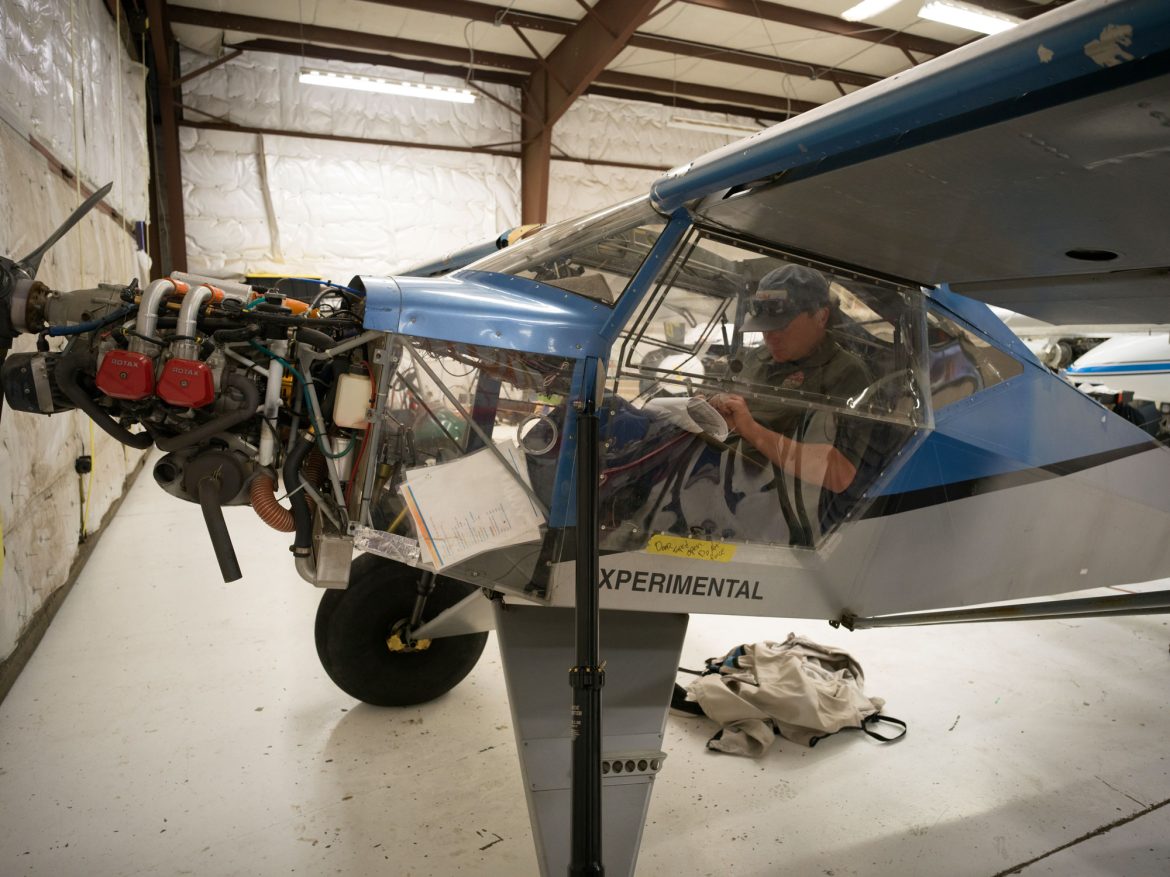
Photos of the wings open. Photos of the fuel tanks. Photos of control routing. Photos of wiring before it was covered. Photos of the panel before everything was buttoned up. Photos of the engine installation. Photos of the fuselage before interior panels went in. Photos of hard-to-access areas.
Those photos may not seem important during the purchase.
They become important later.
When a shop is trying to understand how something was built, a photo can answer questions that the logbook never will. It can show routing, structure, reinforcement, access points, hidden hardware, and how a system was originally assembled.
A good builder photo file can save the owner real money later.
The Pre-Buy Should Be Different on a Homebuilt
A pre-buy inspection on a homebuilt aircraft should not be treated like a quick walkaround and compression check.
The inspection needs to include the airplane and the paperwork.
A mechanic familiar with experimental aircraft should review the records before the purchase. The goal is not just to decide whether the airplane looks clean. The goal is to decide whether the airplane can be supported.
That means looking at the quality of the build, the quality of the records, the condition inspection history, the operating limitations, the equipment, the systems, the engine and propeller documentation, and the availability of kit manufacturer support.
The buyer should ask some hard questions:
Can a shop work on this aircraft without calling the original builder every time something comes up?
Are the wiring diagrams good enough to troubleshoot the electrical system?
Are the condition inspection entries detailed enough to show a real maintenance history?
Are the engine and propeller records complete?
Are modifications documented?
Are replacement parts identifiable?
Is there support from the kit manufacturer or the builder community?
Is the airplane a known design with good support, or a one-off project that may be difficult to maintain?
Those questions matter.
The wrong answer does not always mean you should not buy the airplane. But it may affect the price, the maintenance budget, and the risk you are taking on.
Do Not Assume the Manufacturer Can Save You
Kit manufacturers can be helpful, but they cannot always solve every problem.
Some designs have changed over time. Some companies have changed ownership. Some older kits may have limited support. Some airplanes have been modified away from the original kit configuration. Some builder choices are not documented by the manufacturer because the manufacturer did not make those choices.
That is why the builder’s records matter so much.
When the builder documents the airplane well, the next owner has a path. When the builder does not, the next owner may be stuck trying to reverse-engineer decisions years later.
That can turn a small maintenance issue into a major ownership headache.
How a Good Shop Helps
A good shop does not treat a homebuilt aircraft like a nuisance.
It treats it like an aircraft that needs to be understood.
That means slowing down, reviewing the records, looking at the actual workmanship, identifying what is known and unknown, and helping the owner find a reasonable path forward.
Sometimes that means contacting the kit manufacturer. Sometimes it means researching service information. Sometimes it means asking the owner to find missing records. Sometimes it means inspecting deeper than originally planned. Sometimes it means fabricating or repairing carefully using the right materials and methods. Sometimes it means telling the owner that more information is needed before the aircraft can be signed off.
That is not red tape.
That is responsible maintenance.
In the case we worked through, the owner was close to giving up on the airplane because he could not get the support he needed. We were eventually able to help get the documentation and information required, address the discrepancies, and get the aircraft back in action.
That is the kind of result we like.
Not because it was easy.
Because it kept a good airplane from becoming an abandoned project.
A Homebuilt Can Be a Great Airplane — If You Buy It Right
None of this is meant to scare owners away from experimental aircraft.
Homebuilt airplanes can be outstanding. Some are built to a standard that would make factory aircraft jealous. They can be fast, efficient, capable, modern, and extremely rewarding to own.
But they require a different mindset.
When you buy a certified aircraft, you are buying a known type with factory support and a long maintenance trail.
When you buy a homebuilt aircraft, you are buying one individual airplane.
That airplane’s history matters.
The builder matters.
The records matter.
The support network matters.
The quality of documentation matters.
If you are buying a homebuilt aircraft you did not build, make the documentation part of the deal. Do not wait until the first difficult maintenance issue to find out that nobody knows where the drawings are, what parts were used, how the system was routed, or why something was modified.
That is when ownership gets expensive.
Before You Buy, Bring in a Shop That Knows What to Look For
If you are considering a homebuilt aircraft, have someone experienced review it before you buy it.
Not just the paint. Not just the panel. Not just the compression numbers.
Have them look at the build quality, the records, the systems, the inspection history, the operating limitations, the availability of support, and whether the aircraft can be maintained without turning every squawk into a research project.
That kind of review may save you from buying someone else’s unsolved problem.
And if you already own a homebuilt that has become difficult to support, do not give up too quickly. Sometimes the path is there. It just takes a shop willing to slow down, dig through the details, contact the right people, and help put the airplane back on solid footing.
Bring the airplane. Bring the records. Bring whatever builder documentation you have.
We will help you figure out what you actually own, what it needs, and what it will take to get it safely back in action.