A good Cessna 206 is one of those airplanes that still makes sense.
It hauls people. It hauls gear. It works out of shorter strips than most owners will ever ask of it. It has a big cabin, a good wing, honest utility, and enough useful load to keep earning its keep decades after it left Wichita.
That is why early 206s are still worth putting real money into.
But there is a big difference between upgrading an airplane and actually modernizing one.
Right now, we have an early-model Cessna 206 in the shop that a customer recently purchased. The owner does not want a quick cosmetic freshening. He wants to turn the airplane into a serious, modern, highly capable utility machine. The project includes a Sportsman STOL leading edge cuff, vortex generators, polished and protected bare aluminum leading edges, a full Garmin glass panel, autopilot integration, a custom printed panel, and possibly a three-blade MT composite propeller.
That is a big project.
Done right, this airplane becomes more capable, more precise, better equipped, and more enjoyable to fly. Done wrong, it becomes an expensive collection of good parts installed badly.
That is where the shop matters.
A STOL Kit Is Not Just Something You “Put On”
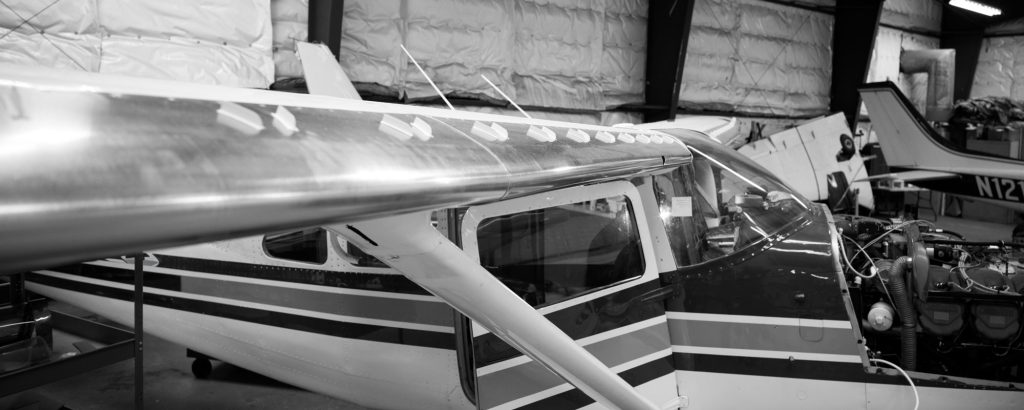
The Sportsman STOL cuff is one of the better-known modifications for Cessna wings, and for good reason. It changes the leading edge profile of the wing. It is not a cosmetic strip. It is not a simple piece of trim. It is a real aerodynamic modification, and it has to be installed like one.
That sounds obvious, but this is where a lot of problems start.
On a Cessna wing, small errors are not always small errors. If the cuff is not fit correctly, if the skins are not sitting right, if the rivet layout is sloppy, if the transition points are ugly, or if the installer treats the kit like a body panel instead of an aerodynamic surface, the airplane may still look “finished” from ten feet away. But it will not be the job it should have been.
We have installed a lot of these STOL kits. The first thing we care about is fit. The second thing we care about is symmetry. The third thing we care about is not getting in a hurry.
A good STOL kit installation starts before the first piece goes on the airplane. The wing has to be inspected. Old repairs matter. Previous leading edge damage matters. Corrosion matters. Existing paint, old filler, patched skins, worn hardware, and questionable prior work all matter.
You do not want to cover up an old problem with a brand-new cuff and call it an upgrade.
That is not modernization. That is hiding something.
When we install a Sportsman cuff, we are looking at the whole leading edge and the surrounding structure. We are checking the condition of the wing, verifying the kit and aircraft eligibility, reviewing the installation instructions, laying everything out carefully, and making sure the install is straight, clean, and documented properly.
The paperwork matters too. Aircraft owners do not always get excited about paperwork, but a clean STC installation with complete logbook entries and supporting documents protects the value of the airplane. Years later, when that aircraft goes through an annual, a pre-buy, or another modification, the next mechanic should be able to understand exactly what was installed and how it was signed off.
A good modification should make the airplane better. It should not create questions for the next shop.
Vortex Generators: Small Parts That Need Real Discipline
Vortex generators are small enough that people underestimate them.
That is a mistake.
VGs work because they are in the right place, at the right angle, in the right pattern, on the correct surfaces. The template matters. Surface prep matters. Adhesive matters. Cure time matters. Placement matters.
You do not eyeball vortex generators.
We have seen airplanes where VGs were treated like decals. That is not how this works. If the kit calls for a specific layout, that layout needs to be followed. If the surface is dirty, oxidized, waxed, or contaminated, the bond can be compromised. If the rows wander, if the spacing is off, or if the installer gets casual around inspection panels, fuel caps, struts, or control surfaces, the owner may not get the benefit they paid for.
On a 206, the owner is usually chasing better low-speed control, better manners at higher angles of attack, and more confidence operating heavy or into shorter strips. That is exactly the kind of flying where you want the installation done correctly.
The irony is that VGs look simple, but simple parts can be the easiest to install wrong because people stop respecting the instructions.
Our approach is slow and boring in the best possible way. We clean the surface properly. We lay out the templates properly. We verify placement. We install the parts carefully. We protect the work while it cures. Then we inspect it like it matters, because it does.
Polished Bare Aluminum Leading Edges
This customer also wants to leave the leading edge in bare aluminum, polish it, and protect it.
That can look incredible on the right airplane. It can also look terrible if the prep work is lazy.
Bare aluminum is honest. Paint hides things. Polish does not.
Every wave, scratch, file mark, poorly dressed edge, and sloppy transition can show up once the surface is polished. That means the sheet metal work has to be clean before the polishing ever starts. The leading edge needs to be straight, smooth, and properly finished. Then the protection needs to make sense for how the airplane will actually be used.
A polished leading edge on a working 206 is not just an appearance decision. Bugs, rain, dust, gravel, tie-down exposure, washing products, and owner maintenance habits all affect how it holds up. So part of the job is setting the owner up with realistic expectations.
We can make it look beautiful. But if the airplane is going to spend its life going in and out of rough strips, the owner needs to understand what it will take to keep that finish looking right.
That is part of doing the job honestly.
Garmin Glass Changes the Airplane
The panel is where this project really starts feeling like a different airplane.
A Cessna 206 with a modern Garmin glass cockpit and an approved, properly integrated autopilot is not the same machine as an old six-pack airplane with a few radios stacked in the middle. The workload changes. The scan changes. The IFR capability changes. The way the owner manages engine data, navigation, traffic, weather, altitude, and approaches changes.
But avionics upgrades are another place where shops can get into trouble.
A panel upgrade is not just cutting metal and plugging in boxes. You are dealing with aircraft eligibility, STC approvals, AML limitations, wiring, circuit protection, antenna placement, cooling, software configuration, pitot-static considerations, autopilot servos, trim systems, annunciation, databases, interfaces, and flight manual supplements.
The pretty part is the panel.
The important part is behind the panel and in the paperwork.
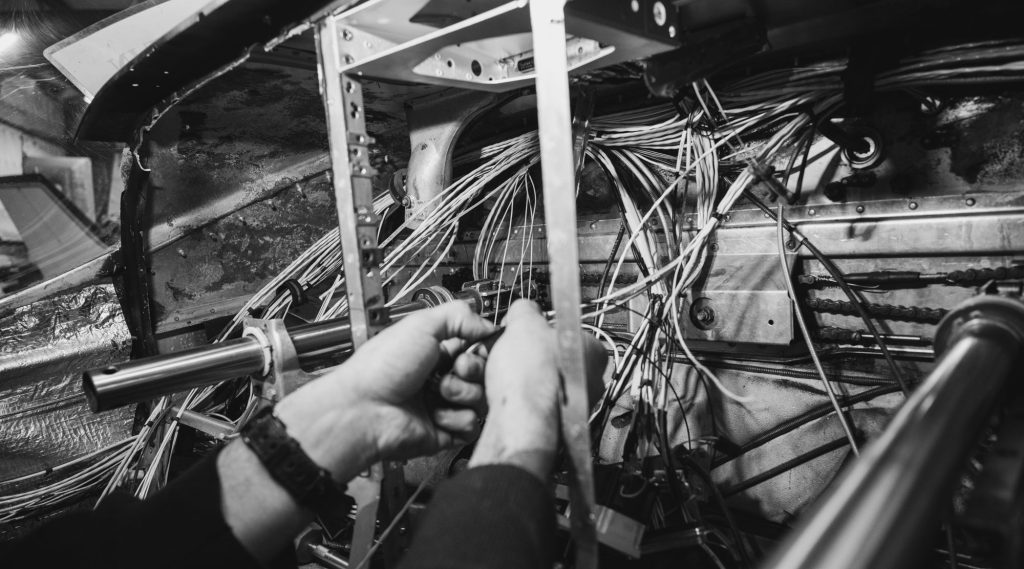
We are a Garmin dealer with in-house avionics capability, so we are not farming the brains of the airplane out to someone else. That matters on a project like this because the airframe work, STOL modifications, prop work, and avionics work all affect the final airplane. When the same shop understands the whole project, the owner gets a better result.
A fully coupled autopilot installation has to be treated with respect. Servo installation, bracketing, cable tensions, control system friction, electrical load, pitch trim behavior, configuration, and flight testing all matter. A modern autopilot is an incredible tool, but it has to be installed, configured, and tested correctly.
There is no glory in a beautiful panel that does not fly right.
The AML Matters More Than Owners Think
One of the interesting parts of this 206 project was the autopilot approval.
On paper, a lot of owners look at a Garmin GFC 500 and think, “Great, put that in the airplane.” But that is not how certified aircraft work. The aircraft has to be eligible under the approved model list, commonly called the AML, and that eligibility can depend on the exact model, configuration, and sometimes serial number.
This particular airplane is an early 206. When we checked the GFC 500 approval path, the serial number fell outside the AML coverage we expected to see. That is the kind of thing that can stop a project cold if the shop is not paying attention.
This is also where using a Garmin dealer matters.
Instead of guessing, forcing the issue, or telling the owner something that might not hold up later, we got Garmin involved. We wanted to understand why this aircraft was not included, whether there was a legitimate path forward, and what options existed for this specific airframe.
That is not the glamorous part of an avionics upgrade, but it is one of the most important parts.
A modern autopilot installation is not just about whether the equipment physically fits in the panel. It is about whether the installation is approved for that exact aircraft. It is about the STC, the AML, the installation manual, the flight manual supplement, the configuration, the interface with the rest of the panel, and the final sign-off.
This is where some shops get owners in trouble. They see a similar aircraft on an approved list and assume this one must be fine too. Or they miss the serial-number break. Or they do not notice that a previous modification changes the approval path. Or they quote a job before verifying that the paperwork actually supports the installation.
That can turn into a very expensive problem.
On a project like this, the avionics decision has to be made with the same discipline as the sheet metal work. We verify first. We ask the manufacturer when needed. We document the path. Then we install.
The owner may never see most of that work. But years later, when the airplane goes through an annual, a pre-buy, an insurance review, or a future avionics upgrade, that discipline matters.
A Good Panel Needs to Work Right and Look Right
On this 206 project, the owner did not just want modern avionics. He wanted a panel that looked as good as the equipment performing behind it.
That matters more than some shops admit.
A panel is one of the parts of the airplane the owner sees every time they fly. If you are investing in a full Garmin glass cockpit, integrated autopilot, engine monitoring, and all the wiring and structural work that goes with that, it makes no sense to stop short and leave the panel looking like an afterthought.
In this case, the owner wanted a very attractive custom panel with printed graphics, including a full-color skyline-style logo with a three-color treatment worked into the design. That meant this part of the project was not just about avionics layout. It was also about presentation.
For the panel work, we used Superior Aircraft Components. Jobs like this are collaborative. We go back and forth with the customer and with the panel vendor to make sure the artwork says what the customer wants it to say, the look is approved, the colors are right, and the final layout works for the aircraft.
That last part matters.
A nice-looking panel still has to be a good aircraft panel. The spacing has to work. The fit has to be right. The cutouts have to be right. The labeling has to be clear. The arrangement of the avionics has to make sense for how the airplane is flown. The end result should not just look impressive in a photo. It should feel natural and clean in the cockpit.
That is one of the differences between a thrown-together avionics install and a well-executed modernization. The best panels look clean because someone took the time to think them through.
When a panel comes out right, the owner gets both: a cockpit that is modern and capable, and one that feels like a finished airplane rather than a patchwork of upgrades.
The Propeller Is Part of the System
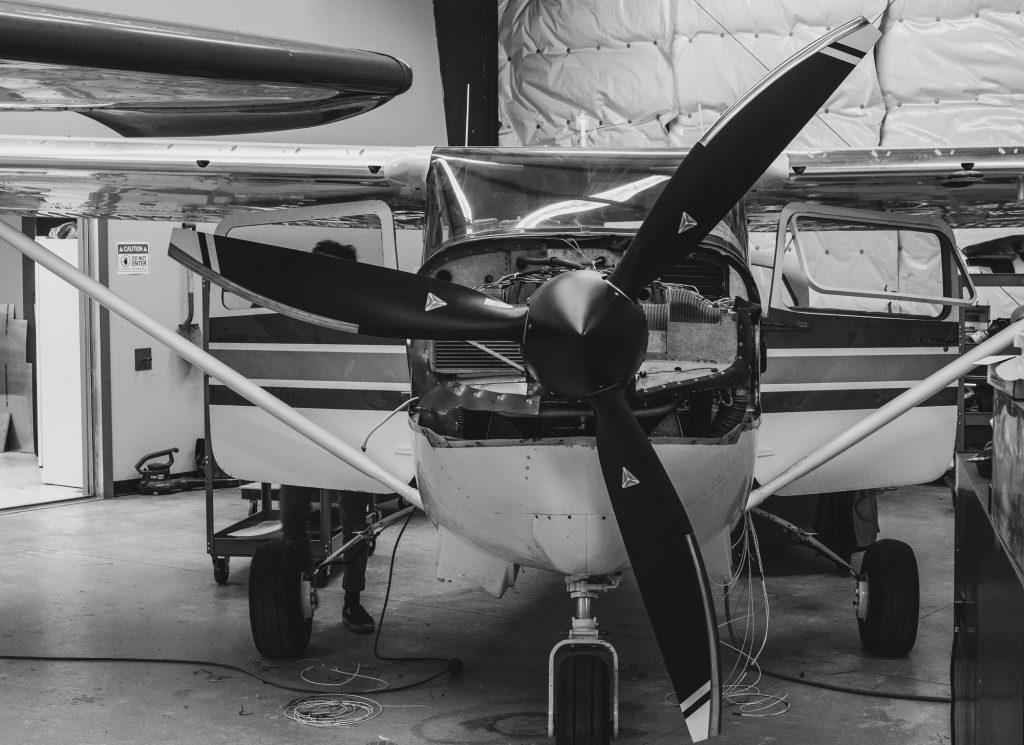
We did not install the three-blade MT prop, but we have installed several of these before. Let’s talk about how a new prop complements this build. Owners often think of the prop as a bolt-on performance upgrade. Take the old prop off, put the new prop on, and the airplane magically becomes better.
It is not quite that simple.
The propeller is part of the whole airplane. Engine, governor, spinner, baffling, cowl fit, weight and balance, vibration characteristics, operating limitations, and paperwork all come into play.
On a 206 that is also getting a Sportsman STOL cuff and vortex generators, the prop choice matters even more. The wing mods are aimed at improving low-speed handling, control authority, and short-field manners. The propeller is what helps the engine turn horsepower into thrust when the airplane is heavy, slow, hot, high, or climbing out of a short strip.
That is where a good composite prop can really complement the rest of the package.
Compared with many older metal propeller installations, the MT composite prop typically gives the airplane a quicker, smoother feel when power is applied. The lighter blades have less rotational inertia, so the prop can respond quickly to throttle and governor changes. That can be noticeable in the places where a utility airplane earns its keep: initial acceleration, the first part of the takeoff roll, climbout, go-arounds, and power corrections close to the ground.
The STOL cuff and VGs help the wing behave better at slower speeds and higher angles of attack. The prop helps by giving the airplane strong, smooth thrust when the pilot is operating in that slower-speed envelope. Those upgrades are doing different jobs, but they are working toward the same goal: better control, better confidence, and better utility when the airplane is not just cruising along at altitude.
The composite MT also helps with smoothness. That is not just a comfort issue. Less vibration is easier on the airplane, the avionics, the panel, the engine accessories, and the people sitting inside. On an airplane, getting a full Garmin glass panel and modern autopilot, reducing vibration is not a bad thing.
There can also be a weight-and-balance benefit. Depending on the exact prop being removed, the composite prop may take weight off the nose. That matters on a 206 because these airplanes already spend their lives balancing useful load, baggage, passengers, fuel, and mission. A lighter prop is not just about the number on the scale. It can change how the airplane feels on the nose, how it handles on the ground, and how the final weight-and-balance picture comes together after the rest of the upgrades are installed.
None of that means the prop decision should be made casually.
A prop change means checking eligibility, verifying the correct model and approval basis, reviewing limitations, confirming governor compatibility, checking spinner fit, updating weight and balance, and making sure the aircraft records are right. If the airplane has other modifications, those need to be considered too.
On a utility airplane like a 206, the propeller should be matched to the mission. Is the owner operating at high density altitude? Flying heavy? Going into short strips? Running IFR cross-country? Spending time in the mountains? Working off gravel? Carrying family, gear, dogs, camping equipment, or all of the above?
The right answer depends on the mission.
Modifications Should Work Together
One of the biggest mistakes owners make is thinking about modifications one at a time.
A STOL cuff is one decision. VGs are another. A propeller is another. A panel is another. An autopilot is another. Interior, useful load, tires, brakes, lighting, engine monitoring, shoulder harnesses, and corrosion prevention are all separate decisions too.
But the airplane does not fly them separately.
It flies as one airplane.
That is why a modernization project needs someone looking at the whole machine. You want the STOL work to make sense with the prop. You want the panel to match the mission. You want the autopilot to be appropriate for the kind of IFR flying the owner will actually do. You want the weight and balance to still make sense when everything is installed. You want the airplane to come out of the shop better, not just heavier and more complicated.
A 206 is a great platform for this kind of work because the airplane has enough utility to justify the investment. But that does not mean every upgrade is automatically a good upgrade.
Sometimes we tell owners to wait. Sometimes we tell them to do one thing before another. Sometimes we tell them that a repair needs to happen before the modification. Sometimes we find old problems that should have been handled years ago.
That is not us trying to make the project bigger. That is us trying to keep the project honest.
The Annual Inspection Mindset Still Applies
Even when the airplane is in for upgrades, we still look at it like maintenance people.
That means we are looking for the things that tend to bite older aircraft owners. Cracked baffles. Tired engine mounts. Old hoses. Worn rod ends. Loose nutplates. Corrosion under paint. Bad grounds. Brittle wiring. Fuel stains. Sloppy prior repairs. Control cable issues. Missing paperwork. Old antennas that should have come off years ago. Hardware store hardware. Zip ties where Adel clamps belong.
A modernization project is the perfect time to fix the old sins.
The airplane is already open. The panel is already apart. The wings are already being worked. The owner is already investing in the future of the airplane. That is the time to make the underlying aircraft right.
There is nothing worse than spending serious money on glass, paint, STOL work, and a prop, then having the airplane grounded later for a preventable maintenance issue that was sitting there the whole time.
Why Experience Matters
A lot of shops can install parts.
Fewer shops can modernize an airplane.
There is a difference.
Modernizing a piston aircraft takes sheet metal ability, inspection experience, avionics knowledge, STC familiarity, paperwork discipline, flight control understanding, and enough real-world judgment to know when something is not right.
That is especially true on older Cessnas. These airplanes have history. Some have been maintained well. Some have been patched together for decades. Some have logbooks that tell the whole story. Some have logbooks that raise more questions than answers.
An experienced shop knows how to slow down and look.
That is what we do.
We are not interested in just bolting expensive parts onto an airplane and pushing it out the door. We want the cuff straight. We want the VGs placed correctly. We want the polished leading edge to look right. We want the Garmin panel wired cleanly and configured correctly. We want the autopilot to fly the airplane the way it should. We want the prop installation clean, legal, and appropriate for the mission. We want the records right.
That is the standard.
Building a Better 206
This early Cessna 206 is going to leave as a very different airplane than the one that arrived.
It will still have the bones of a 206, which is the point. Big cabin. Honest utility. Strong Cessna wing. Real-world hauling ability. But it will have modern avionics, better low-speed capability, cleaner systems, better situational awareness, and upgrades chosen around how the owner actually wants to use the airplane.
That is the kind of project we like.
Not because it is flashy, although it will be.
Because it takes real aircraft maintenance experience to do it correctly.
There are a lot of ways to spend money on an airplane. The goal is to spend it in a way that makes the airplane safer, more capable, more reliable, and more enjoyable to own.
If you are thinking about modernizing a Cessna 206, 182, 180, 185, 210, Bonanza, Cherokee, or another piston aircraft, the best time to talk with a shop is before you start ordering parts. A good plan can save money, prevent rework, and keep the airplane from becoming a collection of mismatched upgrades.
Bring us the mission. Bring us the aircraft records. Bring us the wish list.
We will help you sort out what makes sense, what should wait, and what needs to be done right the first time.